
Home
Parkchester Childhood
Parkchester Childhood

0:00
/
0:00
Parkchester Childhood - Audio
George Andrew Romero was born on February 4, 1940 to Anne Romero (Dvorsky), a Bronx native of Lithuanian background, and George Romero, a Cuban Spaniard who came to the U.S. with his family in 1922. Young George spent his childhood years in the new Parkchester development, a project of the Metropolitan Life Insurance Co. The Romero family were among the first to move into the development in 1940.
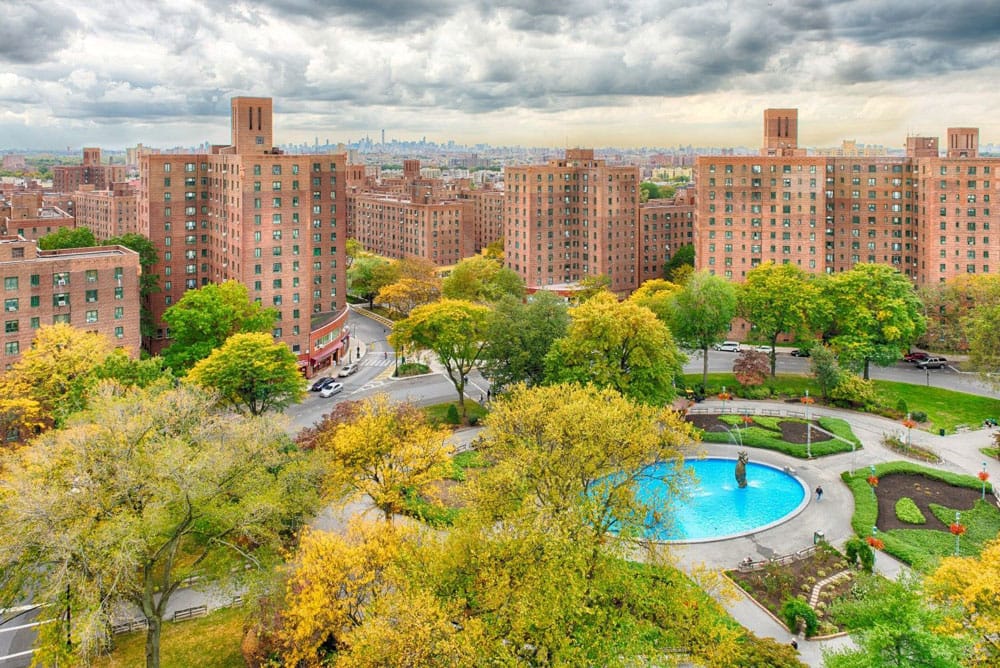
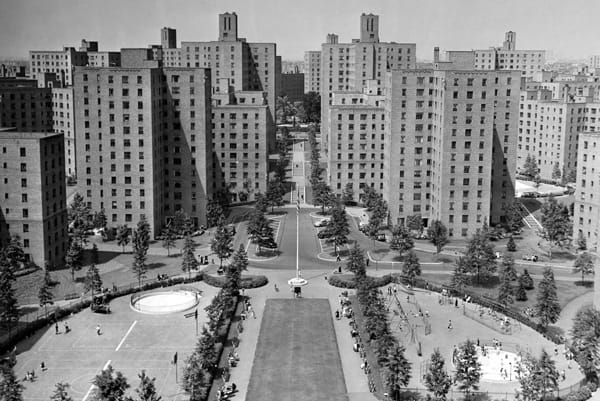
Parkchester displays the design philosophy of larger residential developments in New York City of the time: large towers situated around shared green space. These newer complexes were a major upgrade from the more crowded tenement buildings. However, MetLife refused to rent to applicants of color until the Federal Fair Housing Act of 1968. (They also sold the development at that point.) Mr. Romero and his son, both of light complexion, were the exception when it came to Latinos in Parkchester during its first few decades.
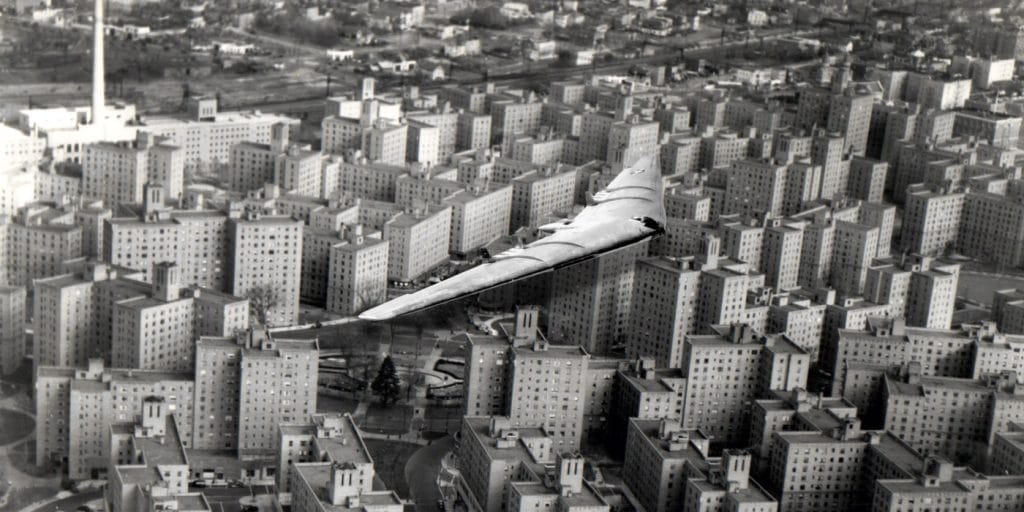
Parkchester was also the scene of George’s first horror experience. The anti-communist “Red Scare” of the late ’40s and ’50s thrived on the fear that the Soviets might start a nuclear holocaust at any moment. Schools held regular atom bomb drills, forcing students to hide under their desks, and movies, cartoons, comic books, radio broadcasts, and newspapers drove home a constant message of panic. For example, “A Short Vision,” which aired on The Ed Sullivan Show in 1956, illustrated what would happen in the event of a nuclear explosion, including the terrifying effects on humans and other living creatures of radiation fallout. Because of this atmosphere of anxiety, every time George heard a plane approaching from miles away, the tall Parkchester buildings screening its approach, he imagined it carried a bomb that would usher in the apocalypse.
Animated PSA ,“A Short Vision,” a Cold War propaganda cartoon that aired on The Ed Sullivan Show in 1956, public domain (left); and production still of ghouls in NOTLD, 1968, courtesy of Image Ten (bottom). 6:08 Mins.
“A Short Vision” frightened young George to the core and had a marked impact on him for years. The short, stark animated film reportedly produced one of the biggest reactions since Orson Welles’ ‘War of the Worlds’ radio broadcast in 1938.
Parkchester CHILDHOOD
George Andrew Romero was born on February 4, 1940 to Anne Romero (Dvorsky), a Bronx native of Lithuanian background, and George Romero, a Cuban Spaniard who came to the U.S. with his family in 1922. Young George spent his childhood years in the new Parkchester development, a project of the Metropolitan Life Insurance Co. The Romero family were among the first to move into the development in 1940. READ MORE
The Teenage "GEO"
“Geo,” as he was known as a kid, attended K–12 at St. Helena’s, attached to the Catholic church of the same name in Parkchester. As a high school student, he participated in the art, drama, and religious clubs as well as choir. In St. Helena’s senior yearbook, Geo claimed he wanted “to be a dentist by studying at Villanova.” Later in life, he reflected that parochial school had been a stifling environment, and his yearbook statement that he was “naturally loaded with school spirit” should probably be read with sarcasm. READ MORE
Becoming GEORGE
A lover of movies from an early age, Geo would often go to the Loew’s American, located at 1450 East Avenue in Parkchester, but there were many other theatres to choose from in The Bronx and Manhattan. The Thing From Another World (1951) and The Man From Planet X (1951), both horror movies, impressed young Geo, but he also enjoyed classics like The Quiet Man (1952), On the Waterfront (1954), and The Ten Commandments (1956). By far the most important movie for him was Tales of Hoffmann (1951), a British technicolor comic opera. READ MORE
Making a MONSTER FLICK
A lover of movies from an early age, Geo would often go to the Loew’s American, located at 1450 East Avenue in Parkchester, but there were many other theatres to choose from in The Bronx and Manhattan. The Thing From Another World (1951) and The Man From Planet X (1951), both horror movies, impressed young Geo, but he also enjoyed blockbuster classics like The Quiet Man (1952), On the Waterfront (1954), and The Ten Commandments (1956). By far the most important movie for him was Tales of Hoffmann (1951), a British technicolor comic opera. READ MORE
Father of the ZOMBIES
Although Romero is known today as “father of the zombies,” he initially had no intention of making zombie movies. Neither Night of the Living Dead (NOTLD) nor any of its production materials used the word “zombie.” These slow-moving, undead ghouls, as they were called, savored the taste of human flesh and overwhelmed the living by their sheer numbers. By the release of Dawn of The Dead (1978) and Day of The Dead (1985), Romero had embraced zombie terminology, first introduced by French reviews of NOTLD, and further developed the lore. Romero’s undead began to show signs of consciousness, with further features emerging in Land of The Dead (2005), Diary of The Dead (2007), and Survival of The Dead (2009). READ MORE
Romero MEETS POE
Romero, a lifelong admirer of renown writer, poet, editor, and critic, Edgar Allan Poe, worked on multiple projects inspired by the author. READ MORE
Horror and BEYOND
Romero’s most popular films like the NOTLD franchise and Creepshow will forever remain horror classics. Deeper cuts illustrate the breadth of his artistry, beyond horror. Martin (1976), for instance, remains one of the most unconventional adaptations of the vampire myth to date, and Knightriders (1981) transposes Arthurian legend to a modern motorcycle renaissance fair troupe. Among the trove of Romero’s unproduced scripts are innovative adaptations of The War of the Worlds (1898), Native Tongue (1984), and Pet Sematary (1983); “Micky B.,” a futuristic android version of Shakespeare’s Macbeth; scripts for superhero and western movies; and much more.
Visited 173 times, 1 visit(s) today